
New York Probate Laws & Fast
Inheritance Advance Solutions
Probate in New York often takes longer than people expect. After a loved one passes, the estate must go through the Surrogate’s Court before any money can be released. During this time, bills still come due, property costs continue, and everyday expenses keep adding up.
Because of this delay, many heirs face ongoing stress and frustration while waiting months, sometimes longer, for access to their inheritance. Even when an estate has value, the court process can leave families in a difficult financial position.
Fortunately, you can get an inheritance advance while probate continues. ProbateCash helps heirs and fiduciaries get a probate advance in New York without waiting for the court process to finish.
Funds can be provided in as little as 24 hours, with no credit checks or monthly payments. You receive money first, and repayment comes later from the estate, not from you personally. That way, you can cover immediate expenses, ease financial pressure, and move forward while probate takes its course.
Understanding the Probate Process in New York
Before any inheritance is paid out in New York, the estate usually must go through probate. This court process exists to confirm that the will is valid, appoint the right person to manage the estate, and make sure debts and taxes are handled correctly.
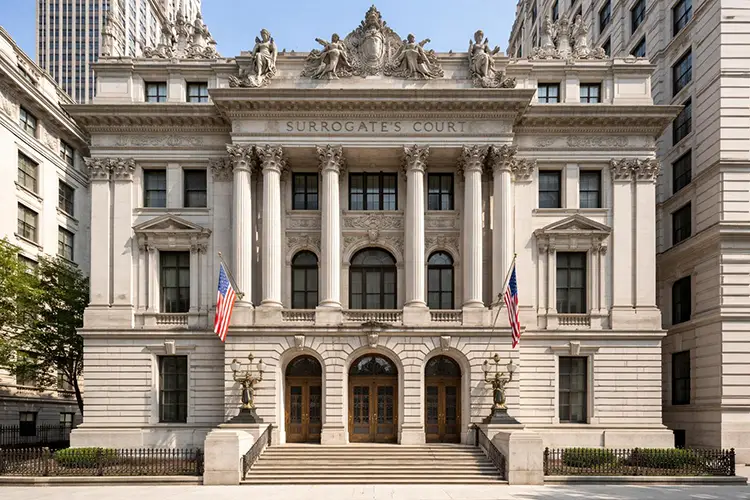
In New York, probate is handled by the Surrogate’s Court in the county where the person lived at the time of death. This court oversees the entire process, even when the will is clear, and no one is disputing it.
To give some context, probate in New York generally follows a set order:
- The will is filed with the Surrogate’s Court
- Next, the court appoints an executor or administrator to manage the estate
- After that, creditors are notified and given time to submit claims.
Only when these steps are complete can assets be distributed to heirs.
Because each step depends on court approval, delays are common. Paperwork issues, court schedules, and estate assets like real estate can slow things down further. As a result, heirs often wait many months before receiving any money, even when the estate has enough funds.
This waiting period is one of the main reasons people look for a probate advance in New York while the court process continues.
How Long Does New York Probate Take?
Probate in New York takes a long time, depending on the estate and how smoothly the court process moves. Simple estates may finish sooner, while larger or contested cases often take longer.
For most uncontested estates, probate commonly lasts 12-24 months. This timing reflects required court procedures and a mandatory waiting period for creditor claims.
Several stages affect how long probate stays open:
Filing the petition and notifying heirs: This often takes 1 to 3 months, based on court schedules and how prepared the paperwork is.
Issuing Letters Testamentary: After filing, the court may take 4 to 8 weeks to grant legal authority to the executor.
Creditor notice period: New York law requires a minimum 7-month window for creditors to submit claims, and this waiting period cannot be shortened.
Asset review and distribution: Once claims are resolved, inventory, debt payments, and distributions may take another 3 to 6 months.
Some situations push probate beyond a year. Will contests, disputes among beneficiaries, heavy court workloads, especially in Manhattan, or complex assets like real estate can extend the process well past 24 months.
Knowing how long New York probate takes can help heirs plan ahead, especially when inheritance funds remain unavailable during the court process.
Does Your Estate Qualify for a Small Estate Affidavit?
Some estates in New York can use a faster court option called Voluntary Administration. People also call it a small estate affidavit or an Affidavit of Voluntary Administration.
In New York, this option can apply when the estate has $50,000 or less in personal property. Personal property can include bank funds, a car, and other items the person owns.
Real estate can change things. If the person owned a home or land in their name alone, the estate usually does not fit the small estate path.
Even so, a small estate does not always mean fast cash. Banks, forms, and court review can still take time. So, some heirs look to obtain a probate advance in New York to cover costs while the court proceedings move forward.
New York Intestate Succession Laws
Sometimes a person passes away without leaving a will. When that happens, New York law decides who inherits the estate. This is called intestate succession.
In these situations, the Surrogate’s Court follows a fixed order based on family relationships. The court does not guess intent or consider personal wishes. Instead, it applies the rules set by state law.
To make this easier to follow, here is a simple reference showing how inheritance usually works in New York when there is no will.
| Family Situation | Who Inherits in New York |
|---|---|
| Spouse & no children or parents | Spouse receives 100% of the estate |
| Spouse & shared children | Spouse receives 1/2 of the estate; children split the remaining 1/2 equally |
| Spouse & children from another relationship | Spouse receives 1/2 or 3/5 of the estate; children receive the remaining portion |
| Children only (no spouse) | Children inherit 100%, split equally |
| Parents only (no spouse or children) | Parents inherit 100%, split equally |
| Siblings only (no spouse, children, or parents) | Siblings inherit 100%, split equally |
Even when these rules are clear, the process still takes time. The court must confirm heirs, review records, and approve each distribution step before any money is released.
Because of this, many heirs in these situations seek an inheritance advance in New York, such as through ProbateCash, to support them while probate continues.
New York Inheritance and Estate Tax Laws
New York does not charge an inheritance tax. Heirs do not pay state tax just for receiving money or property from an estate.
However, New York does impose a state estate tax, which applies before assets are passed on to heirs. In 2026, estates valued above about $7.3 million may be subject to this tax. Since the exemption amount is adjusted over time, the exact threshold can change.
A few details often surprise families:
Estate tax “cliff” rule: If an estate exceeds the exemption by more than 5%, the entire estate becomes taxable. Rates range from 3.06% up to 16%, depending on value.
No spousal portability: New York does not allow a surviving spouse to use any unused estate tax exemption from their partner.
Federal estate tax overlap: Very large estates may also face federal estate tax, which applies at 40% on amounts above the federal exemption.
Because taxes must be reviewed and resolved before money is released, heirs often face longer waits than expected. That delay is another reason families look for short-term financial options while the estate is still under court review.
Get Your New York Inheritance Advance in 4 Simple Steps
The New York probate process can take a long time to complete, creating real financial pressure. ProbateCash offers a clear way to access part of your inheritance while the court process continues.
Step 1: Request an advance: Start by filling out a secure online form or calling our team to request for an inheritance advance. This takes only a few minutes and does not involve a credit check.
Step 2: Estate review: Next, the estate details are reviewed to confirm eligibility. This review is free and focuses on the inheritance itself, not your personal finances.
Step 3: Approve the agreement: Once everything is clear, you sign simple paperwork using your phone, tablet, or computer. There is no long approval chain or complex process.
Step 4: Receive your funds: After approval, funds can be sent in as little as 24 hours, either by wire or check.
It’s important to note that this is not a loan. You have no personal liability. Repayment comes only from the estate when probate ends, not from your income or savings.
This option gives heirs and fiduciaries a practical way to handle expenses while probate moves forward.
Probate Funding Available Across New York Counties
Probate cases are handled at the county level in New York, which means timelines and court procedures can vary based on where the estate is filed. ProbateCash works with heirs and fiduciaries across the state, including both urban and suburban counties.
Support is available in major counties such as:
New York County (Manhattan)
Kings County (Brooklyn)
Queens County
Bronx County
Richmond County (Staten Island)
Nassau County
Suffolk County
Westchester County
And surrounding counties throughout New York.
Wherever the case is filed, ProbateCash supports heirs who need funds before probate is complete.
Need Funds During Probate? We Can Help
CASH FOR YOUR INHERITANCE
Fill out this short form, and we will contact you as soon as possible.
"*" indicates required fields
By submitting this form, I consent to ProbateCash contacting me regarding its service offerings by phone, email and/or text messages using automated dialing devices at the phone number and email address I have provided. I understand that I can halt texts at any time simply by replying “Stop.” I also agree to ProbateCash’s Privacy Policy.