

You’ve been named a beneficiary, and you know money is coming from the estate. But probate is moving slowly, while rent, medical bills, travel, and attorney fees won’t wait. That’s a timing problem, not a personal failing, and you may have more options than you think, including an inheritance cash advance.
- What beneficiaries can and can’t usually receive before probate ends
- Why executors are often cautious about early distributions
- What options exist when you need money urgently
- How an inheritance cash advance works
- What to weigh before choosing one
Can a Beneficiary Get Money Before Probate Ends?
Sometimes, but it depends on the estate, the executor, state law, creditor claims, court approval, and whether the estate has enough available assets.
Beneficiaries usually have no automatic right to their full inheritance before probate is complete. The executor (also called the personal representative) generally has to identify assets, notify creditors, pay valid debts, handle taxes, and follow court procedures before making final distributions.
The American Bar Association tells fiduciaries to make sure debts, taxes, and expenses are paid or provided for before distributing property, because they may be personally liable if the estate later falls short.
IRS probate guidance likewise describes the usual process as addressing estate debts, including funeral and medical bills, taxes, and credit cards, before the remaining estate is distributed to beneficiaries.
Why Probate Delays Leave Beneficiaries Short on Cash
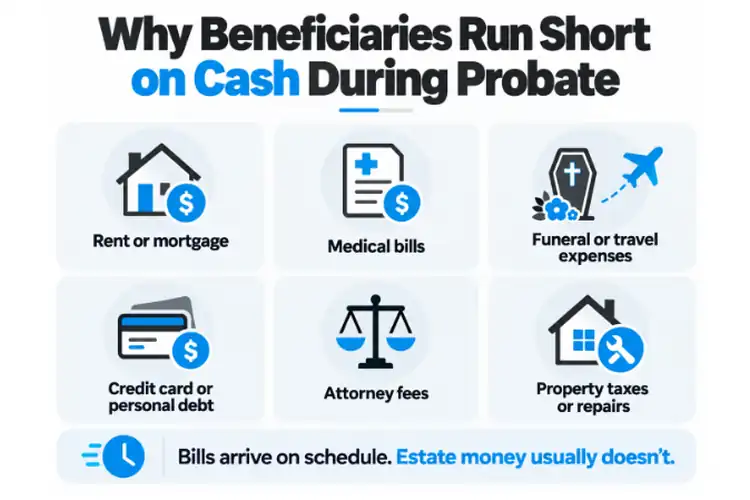
Even a valuable estate may have little cash on hand. It might include a home that still has to be sold, frozen bank accounts, unresolved debts, missing documents, disputes among heirs, tax filings, or court delays.
Meanwhile, beneficiaries often need money for:
- Rent or mortgage payments
- Medical bills
- Funeral or travel expenses
- Credit card or personal debt
- Attorney fees
- Property taxes, repairs, or home maintenance
- Avoiding the forced sale of personal assets
None of this means you’ve been irresponsible. Bills arrive on schedule, but estate money doesn’t.
Why the Executor May Not Be Able to Pay You Early
Executors have fiduciary duties and can face personal liability if they distribute too much too soon. Creditors generally have a limited period to present claims, and the executor must deal with valid claims before the estate can be fully distributed.
Even a cooperative executor may hold back funds because:
- The estate may owe more than expected
- Creditors may still file claims
- Taxes may not be resolved yet
- Other beneficiaries may object
- The court may require approval before distributions
- The estate may need cash for administration costs
That isn’t a judgment about you. It protects the executor and every other beneficiary.
Option 1: Ask About a Partial Distribution
A partial distribution means receiving part of your expected inheritance before the estate fully closes. It may be possible when:
- The estate has enough cash or liquid assets
- Creditor claims and taxes are resolved or reserved for
- The executor is confident the estate can meet all obligations
- The court allows it, where approval is required
- Any required beneficiary notices or court procedures have been completed
It may not work if the estate is uncertain, contested, mostly illiquid, or still within the creditor claim period. If debts, taxes, or disputes surface later, an early payout can create problems for the executor and the estate. Ask the executor or estate attorney what would need to happen first.
Option 2: Wait Until Probate Ends
Waiting may be the lowest-cost choice if you’re not under urgent pressure. It can make sense when:
- The estate is simple and close to distribution
- You have other short-term resources
- The cost of an advance would outweigh the benefit
- You’d like the money, but don’t urgently need it
Waiting may not be realistic when:
- The estate may take many more months
- You’re facing serious financial pressure
- Bills or housing costs can’t be delayed
- Estate property may lose value without maintenance
- You might turn to higher-cost debt otherwise
Option 3: Consider a Traditional Loan or Line of Credit
Some beneficiaries turn to personal loans, credit cards, or home equity. These can work, but watch for:
- Credit checks
- Income requirements
- Monthly payments
- Interest
- Late fees
- Personal liability
- Risk if probate takes longer than expected
These obligations are yours personally, so they continue even if the inheritance arrives later than planned. That’s the key difference from an inheritance advance.
Option 4: Use an Inheritance Cash Advance
An inheritance cash advance lets you receive part of your expected inheritance before probate ends. In simple terms:
- The funding company reviews the estate and your expected share
- If approved, you receive cash now
- The company is paid from your share of the estate when probate closes
- You make no monthly payments from your own funds
At ProbateCash, we don’t run credit checks or require employment history. There are no upfront costs or hidden add-on fees, and funds can arrive in as little as 24 hours after approval and document review. The cost is the difference between the cash you receive now and the amount assigned from your inheritance.
How an Inheritance Cash Advance Works
- Apply online or by phone.
- Share estate and probate details.
- Provide documents showing your expected inheritance.
- We review the estate and your beneficiary interest.
- You receive a clear offer.
- If you accept, funds are sent after approval.
- The agreed amount is paid to us from your share of the estate when probate closes.
Here’s more on the inheritance advance application.
What Documents May Be Needed
Requirements vary by estate, but you may need:
- A death certificate
- Will or trust documents, if available
- The probate case number or court filings
- Letters testamentary or letters of administration, if available
- Documents showing your expected share
- Information about estate assets and debts
- Contact details for the executor, attorney, or personal representative
Missing some items? The executor or estate attorney can often help you get them.
Stop Waiting for Probate
Access your inheritance in as little as 24 hours with a risk-free, non-recourse advance. No credit checks, no monthly payments.
When an Inheritance Money Advance May Make Sense
An inheritance money advance may be a good fit when:
- You have urgent bills that can’t wait
- Probate is expected to take many more months
- The estate value and your share are clear
- You want to avoid high-interest debt
- You need funds to protect estate property or prevent a forced sale
- You understand the cost and are comfortable receiving less later in exchange for cash now
When You May Want to Wait or Explore Other Options
An advance may not be right if:
- Probate is almost finished
- The need isn’t urgent
- The estate is contested or uncertain
- A lower-cost funding option is available
- You’re uncomfortable giving up part of your future inheritance
Questions to Ask Before Accepting an Inheritance Cash Advance
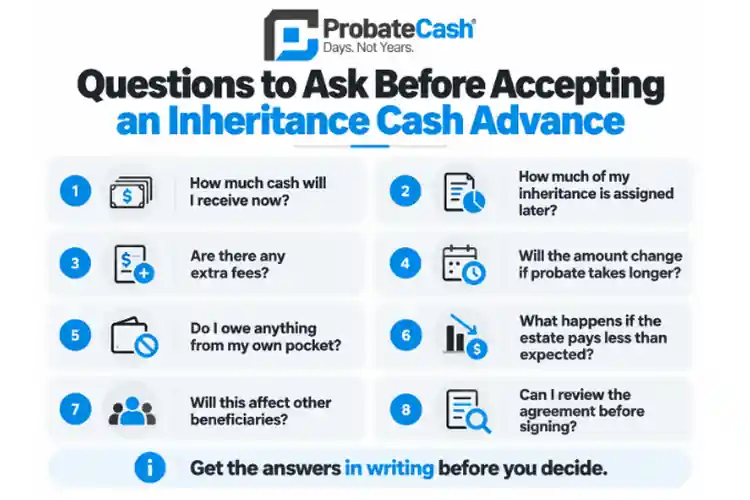
Get answers in writing. Our guide to inheritance advance costs explains how pricing works. Ask:
- How much money will I receive now?
- How much of my future inheritance will be assigned or repaid later?
- Are there any extra fees?
- Will the amount change if probate takes longer?
- Do I owe anything from my own pocket?
- What happens if the estate pays less than expected?
- Will this affect other beneficiaries?
- Does the executor or estate attorney need to be notified?
- Can I review the agreement before signing?
- Should an attorney or financial professional review the terms?
How ProbateCash Helps Beneficiaries Access Money Before Probate Ends
Our goal is to help you access part of your inheritance while probate continues. When the estate distributes, the agreed assigned amount is paid to us from your share. Here’s what you can expect:
- Fast access to funds, often as quickly as 24 hours after approval and document review
- No credit check
- No employment history requirement
- No upfront costs or hidden add-on fees
- Not a traditional loan, and no repayment from your own pocket
- A clear process and professional support
Not sure whether you qualify? We can review your situation and explain your options before you make a decision. Unsure how we differ from lenders? See our advance versus a loan comparison.
Key Takeaways: You May Have Options Before Probate Ends
- Beneficiaries usually can’t demand full payment before probate ends.
- Executors often must first resolve debts, taxes, creditor claims, and court requirements.
- Partial distributions may be possible, but aren’t guaranteed.
- Traditional loans may create personal debt and monthly payments.
- An inheritance cash advance can provide earlier access to funds from your expected inheritance.
- Before accepting any offer, compare what you receive now with what you give up later.
If you’re waiting on an inheritance and need money before probate ends, we can review your situation and explain whether an inheritance cash advance may be available.
No credit check · No monthly payments · Non-recourse advance
Frequently Asked Questions About Getting Money Before Probate Ends
Can a Beneficiary Receive Money Before Probate Is Complete?
Sometimes. A partial distribution may be possible if the estate has enough assets, debts and taxes are handled or reserved for, and the executor or court allows it.
Can an Executor Give Me an Early Distribution?
Possibly, but many executors are cautious because they can be held responsible for distributing assets before debts, taxes, and creditor claims are resolved.
What Is an Inheritance Cash Advance?
It’s a way to receive part of your expected inheritance before probate ends. The advance is paid from your share of the estate when probate closes.
Is an Inheritance Cash Advance the Same as a Loan?
No. An advance isn’t structured like a traditional loan. There are usually no monthly payments, no interest, and no repayment from your own pocket, but review the exact terms.
Does a Probate Cash Advance Affect Other Heirs?
It should apply only to your share, not other beneficiaries’ shares. However, the estate representative may need to coordinate the assignment during administration.
How Fast Can I Receive an Heir Cash Advance?
Timing depends on the estate and document review. With us, funding can be available in as little as 24 hours once everything is confirmed.
What Happens if the Estate Pays Less Than Expected?
Our advances are non-recourse. If your inheritance ends up smaller than expected, whether from unexpected creditor claims, a lower-than-expected property sale, or similar estate issues, you aren’t personally liable for the shortfall. Review your agreement carefully so you know exactly what’s covered.
Should I Speak With an Attorney Before Getting an Advance?
Yes, if you’re unsure about the agreement, tax implications, or how an advance may affect probate administration. An attorney, tax professional, or financial advisor can review it with you.
Disclaimer: This article is for general educational purposes only and is not legal, tax, or financial advice. Probate laws vary by state, and eligibility for inheritance funding depends on the estate, your beneficiary status, available documentation, and other factors. ProbateCash is not a law firm, tax adviser, or financial adviser. Speak with a qualified attorney, tax professional, or financial adviser about your specific situation before making decisions about your inheritance.